Basketball Club Teams San Diego Delivering High-Level Competition
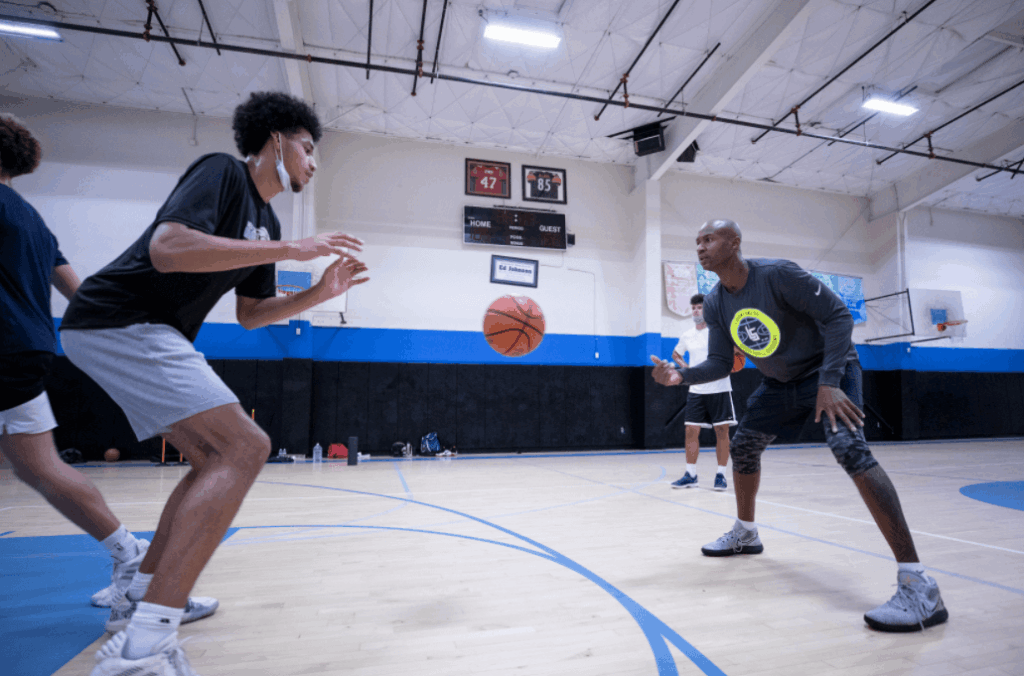
San Diego has long been known for weather, beaches, and a relaxed coastal identity, but anyone who has spent time around local gyms understands a different side of the city. The basketball scene here is serious. It starts early in the morning with skill sessions before school, carries into packed weeknight practices, and peaks on tournament weekends when families, coaches, and college evaluators line the sidelines. For players who want more than a recreational experience, club basketball has become one of the clearest paths to development.
That demand has raised the standard. The best Basketball Club Teams San Diego are not simply collecting talented players and entering tournaments. They are building year-round training cultures, hiring coaches who can teach beyond basic drills, and creating environments where athletes learn how to compete under pressure. The difference matters. A player can score twenty points in a casual setting and still struggle in a serious travel game where every possession is scouted, every defensive rotation is tested, and every mistake gets exposed.
Parents new to this level often see the uniforms, tournament schedules, and travel commitments first. Those details are visible. What truly separates strong programs from weak ones is less obvious. It shows up in how practices are structured, how roles are defined, how coaches communicate after losses, and how older players leave the program better than they entered it. In San Diego, where athletic options are abundant and families have choices, the strongest club teams have earned trust because they produce growth, not just weekend highlights.
Why the level of competition has changed
A decade ago, many local club programs were still regional in feel. Teams played nearby, rosters stayed relatively stable, and the gap between clubs could be wide. Today, the landscape is far more demanding. Better access to training, film study, and exposure events has elevated expectations. Players are starting specialized skill work younger, and families are much more informed about what high-level development should look like.
At the same time, the talent pool in Southern California keeps feeding stronger competition. A San Diego team is not only measuring itself against neighboring clubs. It is often competing against rosters from Orange County, Los Angeles, Inland Empire, and occasionally out-of-state programs with deep benches and polished systems. That level of comparison forces local clubs to improve or get left behind.
The stronger Basketball Club Teams San Diego have responded by becoming more intentional. Practices are faster, defensive standards are higher, and strength and conditioning are no longer treated like optional extras. Even teams at the middle school level now talk about spacing, pace, transition discipline, and reading closeouts. That might sound advanced for young athletes, but it reflects the reality of the modern game. Players who want to thrive in high school varsity programs, and potentially beyond, need to understand more than how to dribble through cones.
What high-level competition actually looks like
People often use the phrase "high-level competition" loosely. In practice, it has a specific feel. The games are faster. The decision-making window is smaller. Opponents recover quicker, switch more cleanly, and punish lazy passes. A player who dominates against undisciplined defenses may suddenly find that driving lanes disappear and weak-hand finishes become necessary.
That is one reason club basketball can be so valuable. It reveals truth quickly. A guard who looks comfortable in open gym settings may discover that handling pressure against aggressive traps is an entirely different challenge. A post player used to scoring over smaller defenders may realize that footwork and timing matter more than size when opponents are equally athletic.
Strong competition also teaches resilience. Not every athlete is used to sharing the floor with peers who are just as skilled, or in some cases more skilled. On a well-built club roster, minutes are earned. Shots are not guaranteed. Coaches may ask a player who was once the primary scorer to become a defender, rebounder, or secondary playmaker. That adjustment is not always easy, but it can be one of the most important steps in long-term growth.
I have seen this play out countless times. The players who eventually separate themselves are rarely the ones who need constant affirmation. They are the ones who absorb coaching, adapt to roles, and keep competing after a rough first half or a tough tournament weekend. Club basketball, at its best, creates those moments repeatedly.
The coaching question matters more than the logo
Families often start by asking which club has the biggest reputation. That is understandable, but the more useful question is who will actually coach the team, and how. A respected brand can help with organization, scheduling, and access to events, but player development happens in the gym with a specific coach, not in a social media graphic.
A strong club coach teaches in layers. Younger teams need fundamentals reinforced constantly, but not in a stale way. Good coaches build habits through competitive drills, then connect those habits to game situations. Older teams need more nuance. They need help understanding pace changes, defensive coverages, help-side positioning, shot selection, and late-game execution. Great coaches also know when to press and when to pull back. Some players respond to direct challenge. Others improve when given a clear, calm framework and room to process.
Communication with families matters too. The best programs in San Diego tend to be direct about expectations. They explain attendance standards, role competition, tournament commitments, and development priorities. That honesty prevents many of the problems that damage team culture. When a program avoids hard conversations, frustration usually builds quietly, then spills over in playing time disputes, midseason exits, or parent sideline behavior that distracts everyone.
There is also a difference between a coach who can train skills and a coach who can build a team. Both matter. A player may improve his handle or shooting form in individual workouts, but five players on the floor still need to function together. Good club coaches teach spacing, timing, communication, and trust. They help athletes understand that basketball rewards connected groups more than isolated talent.
Development is not linear, and good clubs know that
One of the biggest misunderstandings in youth basketball is the idea that progress should be constant and visible every week. Real development does not work that way. Players plateau, then break through. They struggle with confidence, grow physically, adjust to new positions, and sometimes look worse for a stretch while trying to incorporate better habits.
The better Basketball Club Teams San Diego tend to understand this cycle. They do not panic after one poor tournament. They do not decide a player has reached his ceiling at age thirteen. They also do not oversell temporary success. A hot weekend against weaker competition can create false confidence just as easily as a tough stretch can create doubt.
A skilled coach looks for indicators that go deeper than points per game. Is the player making faster reads? Is defensive effort becoming more consistent? Is the shot selection improving? Can the athlete absorb corrections without mentally checking out? Those markers usually predict long-term success better than one scoring outburst in April.
This is especially important during growth spurts and high school transition years. A player who relies on physical maturity early can get exposed once peers catch up. On the other hand, a late-developing athlete with sound footwork and feel often makes a major jump between freshman and junior year. Club environments that value process can help those players stay on course.
The San Diego advantage, and the San Diego challenge
San Diego offers real advantages for club basketball. Weather allows for consistent training year-round. Facilities are spread throughout the county. The local high school basketball tradition continues to strengthen, which creates stronger downstream demand for serious prep. There is also enough population density to support multiple competitive programs without forcing every talented player into the same pipeline.
Still, there are challenges unique to the area. Travel can be more demanding than outsiders assume. A family in North County may spend significant time commuting to practices in central San Diego or tournament sites elsewhere in Southern California. Traffic affects weekday training, and scheduling around school demands can be difficult. Costs add up quickly once travel, uniforms, tournament fees, private training, and recovery needs are considered.
There is also the issue of fit. Because there are several programs competing for attention, families can get distracted by branding or promises. One club may offer stronger tournament access but a weaker training culture. Another may have excellent coaching at younger levels but less continuity for older teams. A third may be ideal for a role player who needs structure, but not the best choice for a high-level prospect seeking national exposure.
That is why the smartest families spend time observing. They watch a practice, not just a game. They notice whether assistant coaches are engaged. They look at how players react when corrected. They pay attention to whether defensive standards are real or only discussed. Those details reveal far more than a win-loss post online.
What players gain beyond exposure
Exposure gets discussed constantly in youth basketball, and for understandable reasons. High school athletes and their families want opportunities. They want to know whether a club can place them in front of the right eyes. That matters, but it should not be the only lens.
The better payoff from club basketball is preparation. College coaches and high school staffs notice players who understand how to compete. They notice athletes who sprint back on defense, talk through switches, handle adversity, and play within a system. Those habits are difficult to fake. High-level club competition creates them through repetition.
Players also learn practical lessons that stay with them. They experience bus rides after difficult losses. They navigate role changes. They face older, stronger, quicker opponents. They learn how to manage fatigue over a long weekend, how to recover emotionally after a poor shooting game, and how to stay engaged even when touches are limited. That is real athletic education.
For many athletes, the social growth matters just as much. A strong club team brings together players from different schools, neighborhoods, and backgrounds. They learn how to build chemistry with teammates they did not grow up with. They adjust to different personalities. They understand that leadership is not always loud. Some of the best captains in youth basketball lead through consistency, body language, and defensive effort rather than speeches.
How families can evaluate a club team realistically
A useful evaluation starts with honesty about the player. Not every athlete needs the same environment. Some need maximum competition right away. Others need a setting where fundamentals and confidence can be built before the pressure level rises too sharply. Problems often begin when the chosen club reflects a family’s aspiration more than the athlete’s current needs.
Here are a few practical signs worth looking for when evaluating Basketball Club Teams San Diego:
- Practices are organized, fast-paced, and coached with purpose.
- Players are held accountable on defense, not just praised for scoring.
- Coaches can explain development goals clearly and specifically.
- Team roles are competitive but not chaotic or political.
- The program’s culture looks stable across age groups, not just on one top roster.
Those points may sound basic, but they are not common enough. In weaker programs, practice energy drifts, transitions are sloppy, and coaches spend too much time reacting rather than teaching. In stronger ones, even a two-hour session has rhythm. Players move from skill segments to competitive play with clear expectations, and feedback is immediate.
Parents should also think carefully about calendar load. More tournaments do not automatically mean better development. Sometimes a team that competes less but trains better makes far more progress. A player who spends every weekend playing may not have enough time to actually improve the weaknesses that show up in games. The strongest programs usually strike a balance between competition and training.
The role of strength, recovery, and body management
As club basketball becomes more serious, the physical side cannot be treated casually. It is no longer enough for players to just show up and hoop. Higher competition demands stronger hips, better balance, more durable ankles, and improved https://maps.app.goo.gl/7JhtuC7NJ8yByuuM9 recovery habits. This becomes especially important during heavy tournament periods when multiple games are packed into short windows.
Many families underestimate the wear on young athletes. A player might practice two or three nights a week, train individually, lift, and then play several games over a weekend. Without proper sleep, nutrition, mobility work, and hydration, performance drops quickly. Worse, compensations start to show up. Knees take extra stress, shooting mechanics flatten, and defensive slides lose sharpness.
Good club coaches do not need to be sports scientists, but they should understand load management at a practical level. They should know when a team looks fatigued, when to scale a practice, and when intensity needs to be redirected rather than increased. The best programs often encourage some version of the following habits:
- Consistent sleep routines during tournament season
- Basic pre-practice mobility and activation work
- Post-game hydration and recovery nutrition
- Honest communication about soreness or overuse
- Off-court strength work built for movement quality, not vanity
None of that is glamorous, but it changes performance. Players who learn body management early usually hold up better as the game speeds up and seasons get longer.
Why team fit often beats team prestige
There is a temptation to chase the biggest name available. Sometimes that is the right move. A highly advanced player may need national competition, deeper exposure events, and teammates who can match his pace every day. But prestige is not automatically the best developmental environment.
A player buried at the end of a loaded roster may get less meaningful game experience than he would on a slightly less prominent team where he is pushed, trusted, and coached through mistakes. The ideal setup sits in a useful tension. The player should be challenged enough to stretch, but involved enough to learn through action.
This is where honest conversations matter. If a coach can clearly describe how a player fits, what skills need work, and how minutes are earned, that transparency is valuable. Vague promises usually age poorly. The best club experiences are not built on fantasy. They are built on alignment between player level, coaching style, roster construction, and long-term goals.
In San Diego, where options exist across the county, fit is often the difference between a frustrating season and a transformative one. I have seen athletes switch into better-aligned programs and improve dramatically, not because they suddenly worked harder, but because the environment finally matched what they needed. They got cleaner instruction, steadier expectations, and enough responsibility to grow.
The next phase for club basketball in San Diego
The future of club basketball in San Diego will likely be shaped by a few factors. Coaching quality will remain the biggest one. As families become more educated, they will continue to separate polished marketing from real substance. Programs that invest in teaching, not just branding, will last.
Player development models will also keep evolving. Expect more integration between team practice, skill training, film review, and physical preparation. That does not mean every youth athlete needs a fully professional routine. It means the strongest programs will continue to blend those pieces more intelligently. The game is too competitive now for development to happen by accident.
There is also reason to expect continued improvement in the overall local standard. As stronger players emerge from San Diego high schools and more families seek serious basketball pathways earlier, club programs will keep raising expectations. That is healthy when done well. It creates better habits, better games, and better preparation for whatever level comes next.
For players who love the game, that is the real opportunity. Basketball Club Teams San Diego are delivering more than travel schedules and tournament entries. At their best, they are creating demanding, honest environments where talent is tested, weaknesses are exposed, and growth becomes difficult to avoid. That kind of competition is not always comfortable, but it is exactly what many young athletes need.
And in a city where the gym culture keeps getting stronger, that standard is becoming the expectation, not the exception.
Lamont Smith Basketball Academy
888 Clairemont Mesa Blvd Suite T-2, San Diego, CA 92123
(619) 639-8778
FAQ About Basketball Club Teams San Diego
How can a player join an LSBA club team?
Players are evaluated during practices so the coaching staff can recommend an appropriate team and development level. Families should contact the academy to confirm current openings and evaluation details.
Are club teams available for newer basketball players?
Yes. LSBA describes multiple levels, including a developmental option for newer players as well as more competitive teams for athletes with prior club experience.
What do LSBA club team practices emphasize?
Practices emphasize basketball fundamentals, team defense, structure, communication, and player development. The specific focus may vary according to the team and experience level.
Do all LSBA teams travel?
Travel expectations vary by level. Some teams focus on local competition, while advanced teams may participate in tournaments elsewhere in Southern California or beyond. Families should confirm the current schedule before enrolling.