Basketball Club Teams San Diego and the Benefits of Structured Coaching
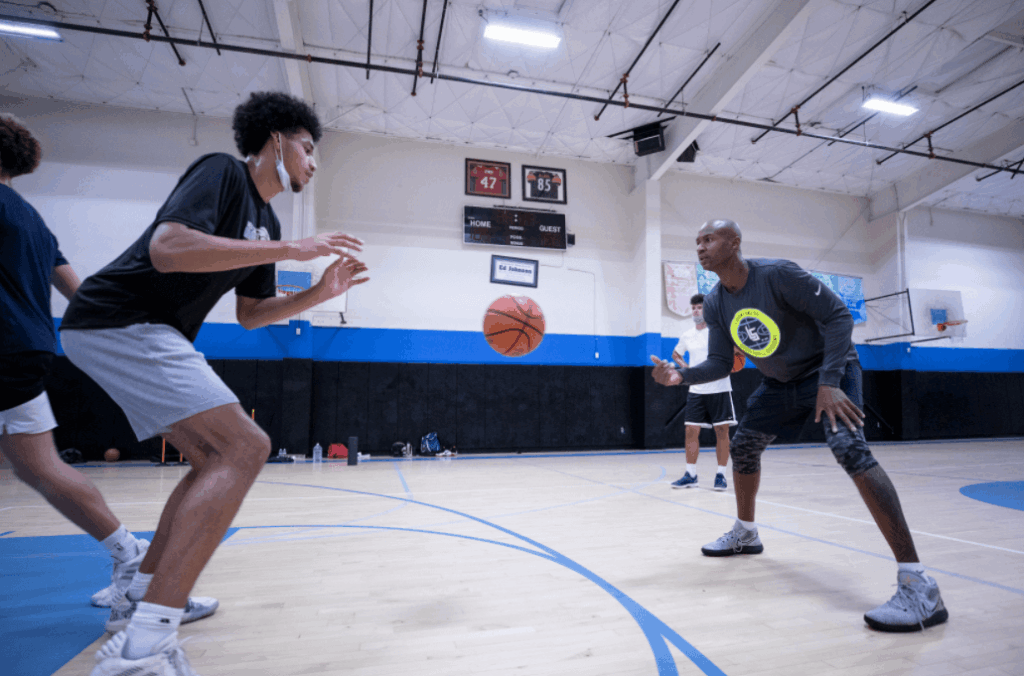
San Diego has always had strong basketball energy, but the way young players develop here has changed. Open gym runs, school teams, and local rec leagues still matter, yet many families now look to Basketball Club Teams San Diego programs for something those settings do not always provide: a structured coaching environment built around long-term growth.
That distinction matters more than people sometimes realize. Talent helps, size helps, and athleticism certainly helps, but none of those traits consistently turn a young player into a reliable contributor on the floor without organized teaching. The players who improve year after year usually come from settings where expectations are clear, practice time has a purpose, and coaches know how to teach more than effort. They teach spacing, timing, decision-making, defensive habits, emotional control, and accountability.
Structured coaching is often the dividing line between a player who looks good in flashes and a player who becomes dependable in real games.
Why structure changes everything
A lot of youth basketball looks busy without being productive. Players run through drills, scrimmage hard, and break a sweat, but they are not always learning. I have seen talented middle school guards spend entire seasons getting praised for quick handles while never learning how to deliver a simple pocket pass on time. I have https://hectoriacd139.swiftnestly.com/posts/exploring-the-competitive-edge-of-basketball-club-teams-san-diego seen post players dominate weaker competition because of size, then struggle badly when opponents matched their strength and exposed poor footwork.
Structured coaching addresses that gap. It connects every part of development. A practice is not just a collection of exercises. It becomes a deliberate progression. Footwork leads into finishing. Finishing leads into reads against help defense. Reads against help defense lead into live game situations. Film review reinforces what happened in practice, and game performance tells the coaching staff what needs attention next.
That kind of system gives players a framework. Once they understand why they are doing something, repetition starts to stick. Instead of hearing, “Play harder,” they hear, “Get to the nail on help,” or “Reject the screen when the defender jumps high side,” or “Sprint to the weak-side slot in transition.” Specific coaching creates specific improvement.
For families evaluating Basketball Club Teams San Diego options, this is one of the most important questions to ask. Does the program simply offer games, or does it offer a development plan?
The San Diego landscape favors serious development
San Diego is a unique place to build as a basketball player. The region has year-round training opportunities, quality weather, and access to competitive tournaments throughout Southern California. It also sits within driving distance of strong basketball hubs in Orange County, Los Angeles, and the Inland Empire. That creates opportunities, but it also creates pressure. Players are not only competing within their own neighborhood or school district. They are being measured against deep talent pools across the state.
In that environment, casual coaching gets exposed quickly.
A player might score 18 points in a local setting by relying on speed alone, but that advantage narrows against disciplined defenders from stronger clubs. A wing who never learned to close out under control will give up open threes all weekend. A point guard who has not been taught pace will play too fast, pick up the dribble early, and turn the ball over against traps. These are not character flaws. They are coaching gaps.
Structured club coaching helps players prepare for the level they say they want to reach. If the goal is varsity contribution, college recruitment, or simply becoming a smarter and more confident player, there has to be a bridge between raw ability and performance under pressure. Good club programs build that bridge through repeated teaching, competitive reps, and honest feedback.
What structured coaching actually looks like
The phrase sounds appealing, but it can become vague if no one defines it. Structured coaching is not just a coach with a loud voice and a clipboard. It is a method.
At its best, it usually includes these elements:
- Clear skill progression by age and role
- Practice plans that build habits, not just intensity
- Consistent terminology across drills and games
- Film or feedback that connects mistakes to solutions
- Accountability for effort, decision-making, and teamwork
When those pieces are present, players improve faster because there is less randomness in the process. A coach is not inventing each session on the fly. The staff knows what the team is trying to become.
Take defensive development as an example. In an unstructured environment, a coach may simply demand “better defense” after a poor game. In a structured one, the staff breaks the issue apart. Was the team late on gap help? Were closeouts too long? Did players lose vision on weak-side cutters? Were on-ball defenders opening their stance too early? Those questions produce teaching points. Teaching points produce drills. Drills produce change.
The same goes for offense. Structured coaching teaches players how possessions fit together. It is one thing to know how to make a crossover move. It is another to understand when a live dribble move creates an advantage, when to move it quickly to the second side, and when to cut through to clear the lane for a post touch. The game gets easier when players see those connections.
Young players need more than playing time
One of the most common misconceptions in youth basketball is that more games automatically equal more development. Games matter, of course. They reveal habits, expose weaknesses, and teach competitive poise. But games alone do not fix problems. They simply display them.
A seventh grader who cannot stop on balance for a pull-up jumper may get thirty game opportunities to try it, but repetition without correction often reinforces bad mechanics. A forward who reaches instead of moving feet on defense can play every weekend and still make the same mistake months later if no one teaches body position and angles.
This is why structured coaching is so valuable in club settings. It puts development ahead of mere participation. A thoughtful coach does not just count minutes. The coach studies what a player does with those minutes.
Sometimes that means slowing things down. I have watched good coaches pull a player aside after a live segment and spend ninety seconds on one detail, such as catching on two feet in traffic or seeing the low man before driving baseline. That short correction can change the next month of that player’s game. It is not dramatic, but it is real development.
Families often chase exposure before a player has built enough substance to benefit from it. Exposure without preparation rarely leads anywhere meaningful. College coaches and high school coaches notice players who understand the game, communicate, defend, and execute under stress. Those traits are usually developed in structured environments long before anyone talks about recruitment.
The benefits extend beyond skill work
The strongest club programs in San Diego are not only building ball handlers and shooters. They are shaping habits that travel into school basketball, college settings, and adult life.
Structured coaching teaches players how to respond when they are not the best athlete in the gym. It teaches them how to absorb criticism without shutting down. It teaches consistency. Showing up prepared for a 6:00 a.m. Workout or staying engaged during a film session is not glamorous, but those habits often separate serious players from talented ones.
There is also a social benefit that gets overlooked. A well-run club team creates standards for communication and shared responsibility. Players learn how to be coached by different personalities, how to compete for roles without resentment, and how to contribute even when the offense is not running through them. Those lessons matter, especially in adolescence, when confidence can swing wildly from one weekend to the next.
Good structure also protects players from the chaos that can sour youth sports. When expectations are clearly communicated, families know where they stand. Players know how minutes are earned. Coaches know what standards they are enforcing. That clarity reduces a lot of the tension that appears when programs are disorganized.
Not every club team offers the same value
This is where judgment matters. The rise in Basketball Club Teams San Diego options has given families more choice, but more choice also means more variation in quality. A polished social media page or a packed tournament calendar does not automatically signal strong coaching.
Some teams operate as travel outfits more than development programs. They may play a large number of games, wear sharp uniforms, and enter respected events, yet spend too little time on teaching. Others may lean so heavily into systems and set plays that players do not develop enough creativity or decision-making freedom. The best environments usually balance both. They teach structure without turning players into robots.
When evaluating a program, parents should watch a practice if possible. A game tells part of the story, but practice reveals the coaching. Watch whether drills have purpose. Watch whether coaches correct details or simply demand effort. Watch whether players understand spacing and timing, or look confused and rushed. Watch the bench too. A healthy program usually has engaged teammates, not detached spectators waiting for their turn.
The questions worth asking are practical ones. How often does the team practice? How are individual skills addressed within the team setting? What is the communication style with families? How are players grouped by level? What is the philosophy on playing time and role development? A serious club should be able to answer those questions without hiding behind buzzwords.
The coach-player relationship shapes confidence
One of the strongest benefits of structured coaching is psychological. Young athletes gain confidence when the environment feels coherent. They know what is expected. They know what the correction means. They know that a mistake can be fixed with work.
That is very different from random criticism. Players do not improve because someone shouts louder. They improve when feedback is specific, timely, and tied to actionable habits.
Consider a young shooter who goes cold for two weekends. In a weak coaching environment, the message might be vague, maybe something like “keep your head up” or “just be aggressive.” In a structured environment, the coach identifies the actual issue. Perhaps the player is fading left on the release, or rushing footwork off the catch, or hesitating because of earlier misses. Once the cause is clear, the player can work through it instead of spiraling.
Confidence built this way is sturdier because it rests on preparation, not praise. Players know they can recover from bad stretches because they understand their own process.
This becomes especially important in high-pressure moments. Tight tournament games reveal whether players trust their habits. Structured coaching creates repeatable habits under stress. A player who has practiced end-of-game spacing, free throw block-outs, baseline out-of-bounds defense, and two-for-one clock management will play calmer late in games. Calm players make better decisions.
Development is not always linear
One thing experienced coaches learn quickly is that progress does not happen in a straight line. Players can look sharp in April, flat in June, and much better by August. Growth spurts affect coordination. School schedules affect energy. Confidence rises and falls. Sometimes a player seems stuck for weeks, then suddenly improves once a technical change feels natural.
Structured coaching helps during those uneven stretches because it gives players something stable to return to. Instead of judging themselves only by points scored, they can track more useful indicators. Are they making earlier reads? Are they defending without fouling? Are they getting into the paint more often? Are they rotating correctly on the back side?
This is one reason I usually prefer clubs that emphasize process metrics as much as game stats. A 13-year-old who scores 20 points by overpowering smaller kids may receive a lot of attention, but a 13-year-old learning to defend multiple positions, relocate after passing, and finish through contact may be building a much stronger future game.
San Diego’s competitive circuit can tempt families to focus too heavily on immediate outcomes. Tournament wins matter, and everyone enjoys them, but the deeper question is whether the player is becoming more complete. By the time athletes reach serious high school competition, the game punishes shortcuts. Structure early on can prevent a lot of painful catching up later.
When structured coaching can go too far
There is a trade-off worth acknowledging. Structure is beneficial, but over-structuring can limit a player if coaches are not careful. Young athletes still need room to explore, create, and solve problems on their own. A guard who is told exactly where to dribble on every possession may struggle when a defense disrupts the plan. A forward who never handles the ball outside scripted drills may miss a chance to expand the game.
Good coaching structure should support decision-making, not replace it.
That balance is easier to strike with experienced staff. They know when to stop play and correct, and when to let players work through mistakes live. They know when a player needs tighter fundamentals and when that same player needs freedom to attack. They know that not every turnover is bad. Sometimes a failed read is part of learning how to make the right one later.
Parents should pay attention to whether a club values basketball IQ alongside obedience. The strongest programs build disciplined players who can still think for themselves.
What families should look for in San Diego clubs
Choosing among Basketball Club Teams San Diego offerings can feel overwhelming, especially for families new to the process. The right fit depends on age, goals, budget, travel tolerance, and the player’s current level. Still, certain signs consistently point toward healthy development environments.
Look for coaches who teach in complete sentences, not slogans. Look for players who improve over time, not just the already talented ones who dominate early. Look for practices where fundamentals show up inside live action rather than sitting in isolation. Look for age-appropriate expectations. A fourth grader does not need the same tactical complexity as a high school sophomore, but both need real teaching.
The most reliable signs are often simple:
- Players are corrected with precision and respect
- Practice intensity has a clear purpose
- Team concepts show up consistently in games
- Development matters at least as much as exposure
- Communication with families is direct and honest
Those standards may sound basic, but many programs miss one or more of them.
It is also worth considering whether the club’s style fits the player. A highly skilled but quiet athlete may thrive with coaches who teach firmly without theatrics. A raw, energetic player may need a staff that channels emotion while drilling fundamentals relentlessly. There is no single perfect environment for everyone. The best fit is the one that combines challenge, clarity, and trust.
The long view matters most
What structured coaching ultimately offers is not just better weekends. It offers a better trajectory.
Players who learn the game in organized, intentional settings tend to carry themselves differently. They move with more purpose. They understand why possessions break down. They can adjust when opponents take away a first option. They bounce back from rough stretches because they have language and habits to rely on.
That kind of foundation is especially valuable in a basketball community as active and competitive as San Diego’s. With so many club opportunities available, families can easily focus on tournament schedules, rankings, or short-term visibility. Those things have their place, but they are secondary. The real question is whether a player is being taught in a way that will still matter two or three years from now.
A well-structured club program helps athletes answer the game’s hardest demands. Can you make the next read? Can you defend when tired? Can you stay composed after mistakes? Can you contribute when the ball is not in your hands? Can you absorb coaching and apply it quickly?
Those are the traits that last. They are also the traits most likely to come from strong, structured coaching rather than chance.
For families exploring Basketball Club Teams San Diego, that should be the lens. Not which team has the loudest brand, or the busiest calendar, or the flashiest highlights. The better question is simpler and more useful: who is actually teaching the game, every week, in a way young players can grow from?
When that answer is clear, the benefits usually reach far beyond the season.
Lamont Smith Basketball Academy
888 Clairemont Mesa Blvd Suite T-2, San Diego, CA 92123
(619) 639-8778
FAQ About Basketball Club Teams San Diego
How can a player join an LSBA club team?
Players are evaluated during practices so the coaching staff can recommend an appropriate team and development level. Families should contact the academy to confirm current openings and evaluation details.
Are club teams available for newer basketball players?
Yes. LSBA describes multiple levels, including a developmental option for newer players as well as more competitive teams for athletes with prior club experience.
What do LSBA club team practices emphasize?
Practices emphasize basketball fundamentals, team defense, structure, communication, and player development. The specific focus may vary according to the team and experience level.
Do all LSBA teams travel?
Travel expectations vary by level. Some teams focus on local competition, while advanced teams may participate in tournaments elsewhere in Southern California or beyond. Families should confirm the current schedule before enrolling.